Pregnancy is a beautiful journey, but it also brings many emotional changes. One common challenge many women face is mood swings during pregnancy. These emotional ups and downs can start early and continue through the nine months. If you or someone close is pregnant and feeling emotionally overwhelmed, know that it is normal and manageable.
In this article, we’ll explore what causes mood swings, when they usually begin, and most importantly, how to deal with mood swings during pregnancy using practical, safe, and research-backed strategies.
Table of Contents
ToggleWhat Causes Mood Swings During Pregnancy?
The main reason behind pregnancy mood swings is hormonal changes. During pregnancy, your body produces more estrogen and progesterone, which affect brain chemicals responsible for emotions. These hormonal shifts can lead to sudden mood changes, irritability, sadness, or even bursts of joy.
Apart from hormones, physical discomfort (nausea, fatigue), stress about the baby or delivery, relationship issues, or body image concerns also contribute to emotional changes.
Research Insight: According to a study published in the Journal of Affective Disorders, hormonal changes in the first trimester significantly affect mood and emotional sensitivity. (Source: ScienceDirect)
When Do Mood Swings Start in Pregnancy?
Mood swings can start as early as the first trimester, around 6 to 10 weeks. They may calm down in the second trimester but can return in the third trimester due to fatigue, sleep issues, and anxiety about childbirth.
Some women also report emotional sensitivity during weeks 25–28, as they adjust to physical changes and increasing responsibilities.
Mood Swings in the First Trimester: Why It Feels So Intense
The first trimester is full of changes. Your body is adjusting to new hormones, and you may feel tired, nauseated, or confused. Even small issues may feel overwhelming.
Common Signs:
Crying easily
Feeling angry or anxious without a reason
Being overly sensitive to comments
This is when support from family and rest become very important.
How to Deal with Mood Swings During Pregnancy
Here are 7 simple and practical ways to manage mood swings safely during pregnancy:
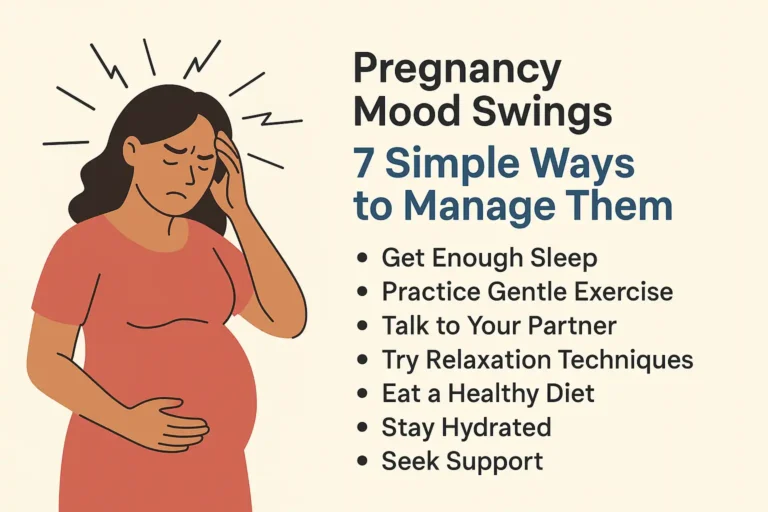
1. Get Enough Rest
Fatigue makes emotions harder to control. Take short naps during the day and ensure 7–8 hours of sleep at night.
2. Eat Healthy and Often
Low blood sugar can worsen irritability. Eat small, frequent meals rich in protein, whole grains, and fresh fruits.
Tip: Avoid excess caffeine and sugar, which may worsen mood changes.
3. Talk to Someone You Trust
Sharing your feelings can reduce stress. Talk to your partner, a friend, or join an online support group for pregnant women.
4. Gentle Exercise
Walking, prenatal yoga, or light stretching can release endorphins, also known as “feel-good hormones.”
Reference: The American College of Obstetricians and Gynecologists recommends at least 30 minutes of moderate activity during pregnancy, unless advised otherwise.
5. Practice Deep Breathing or Meditation
Just 10 minutes a day can make a big difference. Try breathing exercises or simple meditation to calm your mind.
6. Create a Calm Daily Routine
Keep your schedule light. Avoid too many commitments and take regular breaks. Listening to music, reading, or taking a warm bath can help relax your mind.
7. Seek Professional Support If Needed
If you feel sad or anxious most of the time, or feel emotionally out of control, talk to a doctor or counselor. You might be experiencing prenatal depression or anxiety, which is treatable.
Don’t ignore signs like constant sadness, loss of interest in activities, or trouble sleeping — these require professional help.
What to Do If You Feel Angry or Irritable
Many women report feeling easily irritated or even angry. This could be due to hormones, but it might also signal emotional overload.
Try these:
Step away from stressful situations
Use a journal to express feelings
Do light housework or listen to calming music
Remember, emotions are not bad — it’s how you manage them that matters.
Involving Your Partner: Help Them Understand
Many partners don’t realize what you’re going through. Help them understand it’s not “just moodiness” but a real hormonal and emotional shift. Encourage open communication. Share articles or videos with them to help explain.
Tip for partners: Listen without judging or trying to “fix” everything. Offer emotional support and practical help.
FAQs: People Also Ask
Yes, hormonal changes in early pregnancy can lead to strong mood changes even before a missed period.
Yes, emotional outbursts are common, but if you feel out of control, speak to a healthcare professional
They can appear anytime, but often reduce after the first trimester. However, they may return in the third trimester.
Main causes are hormonal surges—especially in estrogen and progesterone—alongside sleep deprivation, fatigue, and emotional stress
They often start in the first trimester, around weeks 6–10, may ease mid-pregnancy, and sometimes return in the third trimester
Yes—ranging from tears to irritability—is common due to both physical and emotional changes
They can come and go—most intense in first trimester, often lighter mid-pregnancy, may recur late in pregnancy
Yes. Persistent sadness, anxiety, or irritability lasting over two weeks might signal prenatal depression and need medical attention
Tips include regular rest, balanced meals, gentle exercise, deep breathing, journaling, support groups, or professional help if severe
Because hormonal and emotional changes are invisible, partners may not fully grasp the intensity—even though emotional support, empathy, and simple gestures help
Yes—low or spiking blood sugar, especially from high-sugar snacks, can worsen mood swings—balanced meals help stabilize emotions
No—typical mood swings don’t harm the baby. However, untreated depression or chronic stress can have risks and should be addressed
Seek help if mood changes are intense, persistent, affect daily life, or include symptoms like extreme fatigue, hopelessness, or thoughts of harm—talk to a doctor or midwife.
Conclusion
Understanding how to deal with mood swings during pregnancy is an important part of your emotional and physical well-being. Mood swings are a normal part of the journey, and you are not alone. With a few mindful lifestyle changes — such as getting proper sleep, eating healthy, staying active with light exercise, seeking emotional support, and maintaining open communication — you can manage your emotions more effectively.
If you ever feel emotionally overwhelmed, never hesitate to seek help from a professional. Taking care of your mental health is just as important as your physical health during pregnancy.